Blog

January 18, 2026

Published by Admin

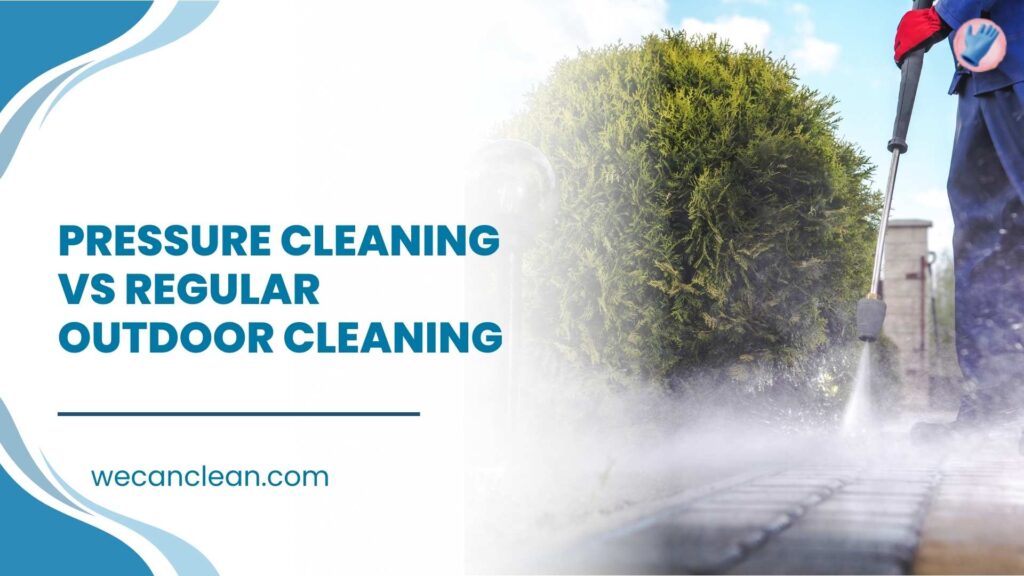
Pressure Cleaning vs Regular Outdoor Cleaning
Choosing the right method for different outdoor surfaces
Outdoor cleaning seems simple but which one is best Pressure Cleaning or Regular Outdoor Cleaning.
Sweep the area. Hose it down. Maybe scrub a little if something looks stubborn. For many homes and properties, that feels like enough. 🧹
Until it isn’t.
Landlords, homeowners, strata managers, and business owners often discover the hard way that outdoor dirt behaves very differently from indoor mess.
Weather, moisture, pollution, foot traffic, and organic growth all play a role.
Outdoor surfaces can harbour mould and algae that not only damage materials but also increase slip risks. That is why understanding the difference between pressure cleaning and regular outdoor cleaning matters more than people realise.
Catchphrase: Not all dirt needs the same solution.
What Most People Mean by “Outdoor Cleaning”
When most people think of outdoor cleaning, they think of maintenance tasks.
Sweeping pathways.
Hosing down patios.
Rinsing driveways.
Removing visible debris.
This type of cleaning keeps spaces looking tidy and prevents loose dirt from building up too quickly.
It is familiar, low effort, and feels productive.
For light dirt and short-term appearance, regular outdoor cleaning does its job.
But outdoor grime rarely stays on the surface.
Catchphrase: Surface clean looks good, until it doesn’t.
What Regular Outdoor Cleaning Does Well
Regular outdoor cleaning is valuable for maintenance.
It helps control dust, leaves, and loose debris. It keeps areas visually neat and prevents small messes from becoming larger ones.
For households and businesses that clean frequently, it can slow down build-up.
🧼 Regular cleaning works best as a routine, not as a solution for deeper problems.
Catchphrase: Regular cleaning maintains, it doesn’t restore.
Where Regular Outdoor Cleaning Falls Short
The biggest limitation of regular outdoor cleaning is penetration.
Outdoor surfaces are porous. Concrete, pavers, tiles, and stone absorb moisture, dirt, oils, and organic matter.
Over time, grime settles below the surface.
Mould and algae thrive in damp conditions. They are not just cosmetic. They create slippery surfaces and accelerate wear.
Hosing and sweeping simply cannot remove what is embedded.
That is when frustration begins. 😬
Catchphrase: Some dirt does not rinse away.
What Pressure Cleaning Actually Is
Pressure cleaning is often misunderstood.
It is not about blasting surfaces aggressively. Professional pressure cleaning is about controlled pressure, correct water flow, and surface-specific techniques.
Different surfaces require different approaches. Too much pressure can damage materials. Too little pressure does nothing.
When done properly, pressure cleaning lifts contaminants from within the surface, not just off the top.
If you want to see the service that is designed for this type of restoration, explore Pressure Washing.
Catchphrase: Pressure cleaning is precision, not brute force.
What Pressure Cleaning Removes That Regular Cleaning Can’t
Pressure cleaning targets what regular cleaning cannot reach.
It removes mould and algae from within porous surfaces.
It breaks down oil stains and grease.
It clears built-up grime that has hardened over time.
💦 This is why pressure cleaning can dramatically improve appearance and safety in one session.
It does not just make areas look cleaner. It resets the surface.
Catchphrase: Deep problems need deep solutions.
Case Study: When Regular Cleaning Wasn’t Enough
A strata property relied on weekly outdoor cleaning to maintain common areas.
Paths were swept and hosed regularly. At first, everything looked fine.
Over time, residents began complaining about slippery surfaces after rain.
Regular cleaning increased, but the problem remained.
A professional pressure clean was eventually performed. Built-up algae was removed from within the concrete.
Slip risk dropped immediately.
“It finally feels safe again.”
If you want to understand how cleaning standards change depending on depth and purpose, read deep cleaning vs regular cleaning.
Catchphrase: Maintenance delayed can become restoration required.
Safety and Property Protection Differences
Outdoor cleaning is not just about appearance.
Slips and falls are one of the most common property risks. Algae and mould significantly increase that risk, especially in shaded or damp areas.
Pressure cleaning, when done correctly, removes these hazards.
When done incorrectly, it can damage surfaces.
That is why professional assessment matters. The right pressure protects surfaces while restoring safety. ✅
Catchphrase: Cleaning should reduce risk, not create it.
Cost Comparison Over Time
Many people avoid pressure cleaning because it feels more expensive upfront.
But cost should be measured over time.
Regular cleaning that never addresses build-up eventually leads to damage, staining, and surface degradation.
Repairs cost far more than preventative cleaning. 💰
If you want to understand how poor cleaning becomes expensive later, see the cost of poor cleaning.
Catchphrase: Cheap cleaning can be expensive later.
When You Need Regular Cleaning vs Pressure Cleaning
Both methods have a place.
Regular outdoor cleaning suits routine maintenance.
Pressure cleaning suits restoration and prevention.
Homes often benefit from pressure cleaning seasonally.
Rentals and Airbnbs may need it between tenancies for presentation.
Strata and commercial properties rely on it for safety and compliance.
For larger sites, outdoor presentation is often tied to indoor expectations too, which is why many businesses use structured Commercial Cleaning plans alongside exterior upkeep.
Catchphrase: The right method depends on the situation.
How Professionals Decide Which Method to Use
Professionals do not guess.
They assess surface type, age, build-up level, exposure to moisture, and safety concerns.
They choose pressure levels and methods that suit the material, not just what looks dirty.
Experience matters here. Knowing when pressure cleaning is required, and when it is not, prevents unnecessary damage and cost.
Want to know what professional standards look like behind the scenes? Read behind professional cleaners training.
Catchphrase: Experience chooses the right tool.
Final Thoughts: Choosing the Right Outdoor Cleaning Strategy
Outdoor cleaning works best when it is strategic.
Regular cleaning maintains appearances. Pressure cleaning restores and protects.
Together, they prevent long-term damage and reduce safety risks.
Smart cleaning is not about doing more. It is about doing what works. 🌿
Catchphrase: Smart cleaning protects your property.
Next steps
🧽 If your outdoor areas look worn, slippery, or stained even after regular hosing and sweeping, pressure cleaning may be the missing piece.
Keeping waste areas clean also supports outdoor hygiene, especially in shared buildings. A consistent Bin collection routine can reduce odours and improve overall site presentation.
Contact us to book a pressure cleaning service that restores outdoor surfaces safely and helps your property look its best.
Leave a Comment
Share:


Related Blog: