Blog

December 19, 2025

Published by Admin

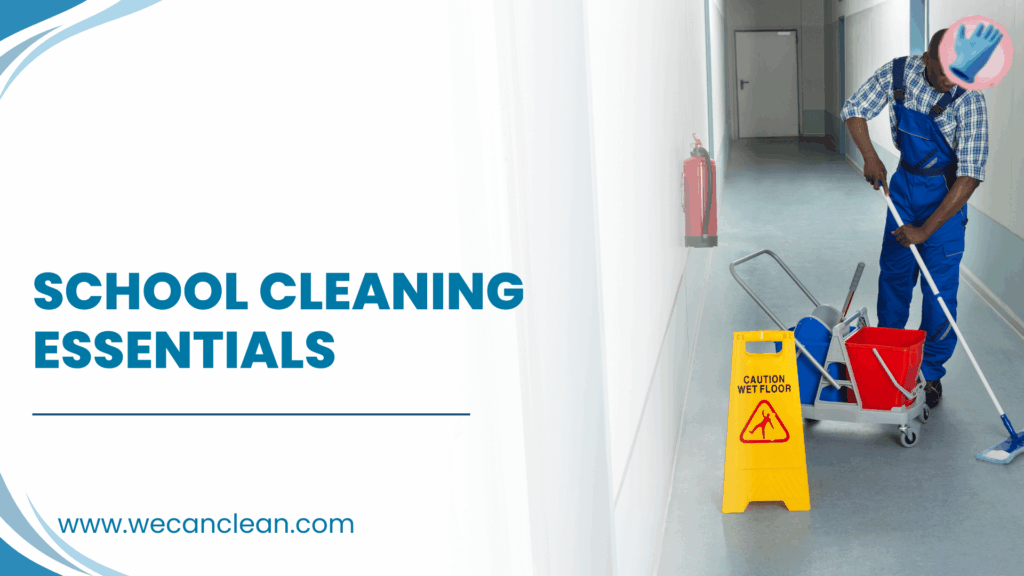
School Cleaning Essentials: How Cleaners Keep Students Safe and Healthy
Essential School Cleaning Practices for Safe Learning Environments
Schools are some of the busiest, most fast paced environments in Australia. Hundreds of students touching surfaces, moving through hallways, sharing desks, opening doors, using restrooms, and eating on the go. It is no surprise that germs spread quickly and mess builds up faster than most people realise.
Behind the scenes, professional school cleaners work quietly to keep students safe, classrooms fresh, and teachers supported. Their work shapes the atmosphere of the entire school day, even though many people never see it happen.
Catchphrase: Clean schools create confident learners.
Why School Cleaning Matters More Than Ever
Children touch hundreds of surfaces each day. Doorknobs. Desks. Rubbers. Screens. Chairs. Water fountains. The list goes on.
Here is why school cleaning is essential:
- Germs spread extremely fast in shared learning spaces.
- Absenteeism increases when hygiene is poor.
- Students concentrate better in clean, organised environments.
- Air quality influences breathing, mood, and behaviour.
- Parents expect modern schools to maintain strict hygiene.
Cleanliness is no longer a nice to have. It is an essential part of education.
Catchphrase: A clean school is a healthier school.
What Professional School Cleaners Actually Do Daily
Professional cleaners follow structured routines that target hygiene, safety, and maintenance. Their work goes far beyond a quick sweep or a rushed wipe down.
Here is what happens every day:
- 🧽 Desk and surface sanitation: Classroom desks, tables, and common surfaces are wiped and sanitised to minimise germ spread.
- 🧹 Floor cleaning and hallway maintenance: Sweeping, mopping, and vacuuming keep high traffic areas safe, clean, and presentable.
- 🚽 Restroom sanitising and restocking: Toilets, basins, taps, and cubicles are cleaned and restocked with soap, paper, and supplies.
- 🧴 High touch disinfection: Door handles, railings, switches, keyboards, and shared equipment are regularly sanitised.
- 🪟 Window and glass cleaning: Clear glass improves light, mood, and focus for students and teachers.
- 🗑 Rubbish and recycling management: Bins are emptied, liners replaced, and waste removed to prevent smells and pests.
These daily tasks reduce illness, create calmer environments, and support teacher productivity throughout the school year.
Catchphrase: Consistency is what keeps germs under control.
Deep Cleaning Essentials for Schools
Daily cleaning maintains basic hygiene, but deep cleaning resets the entire school environment and deals with build up that regular routines cannot reach.
Deep cleaning in schools can include:
- Steam cleaning carpets and fabric surfaces to remove embedded dirt and allergens.
- Scrubbing hard floors with specialised equipment for a more thorough clean.
- Cleaning canteens, kitchens, and food handling areas to strict hygiene standards.
- Sanitising play equipment, outdoor furniture, and high use external areas.
- Removing built up grime from corners, skirting boards, and hard to reach spots.
- Dusting and cleaning high ledges, fans, and air vents to improve air quality.
Deep cleaning is usually scheduled during school holidays or term breaks so it does not interrupt learning.
Catchphrase: Deep cleaning resets the entire school environment.
Case Study: A Sydney Primary School That Needed a Hygiene Reset
A primary school in Sydney started to notice some worrying patterns. Students were getting sick more often. Classrooms felt dusty. Teachers found themselves wiping down desks between lessons. Parents mentioned that the school sometimes smelled musty at pick up time.
The principal reached out to WeCanClean for help.
During the initial assessment, the team found several key issues:
- High touch surfaces were not being disinfected thoroughly or often enough.
- Classrooms had dust build up in vents, on ledges, and in quiet corners.
- Restrooms were cleaned, but not to a consistent standard each day.
- Carpets held allergens and deeply embedded dirt from years of traffic.
WeCanClean introduced a structured cleaning plan, including daily high touch disinfection, improved air quality cleaning, and scheduled deep cleaning during term breaks.
Within a few months:
- Classrooms felt noticeably fresher and more comfortable.
- Teachers commented that their allergies improved during the day.
- Parents began praising the cleaner, more welcoming environment.
- Sick days among students started to decline.
Research shows that schools with improved hygiene can reduce illness related absences by a significant margin when cleaning is consistent and targeted.
Catchphrase: Cleanliness boosts learning more than people realise.
What Makes Professional School Cleaners Different
School cleaning requires specific knowledge, care, and discipline. It is not the same as general cleaning for homes or offices.
Professional school cleaners bring:
- Child safe, non toxic cleaning products suitable for sensitive environments.
- Training on proper chemical handling and storage for safety.
- Efficient equipment designed to handle large buildings and high traffic areas.
- Reliability and consistent procedures that schools can depend on.
- Compliance with health, safety, and infection control standards.
- Clear communication, reporting, and accountability for each shift.
They understand that schools are unique spaces where safety, respect, and routine matter just as much as visible cleanliness.
Catchphrase: Professional cleaners protect learning environments.
How Cleaners Keep Students Safe
Cleaners do far more than tidy up. They are part of the safety net that protects students and staff from avoidable health risks.
They help keep students safe by:
- Preventing cross contamination through correct cleaning sequences and tools.
- Using colour coded cloths and mops to separate bathroom, classroom, and food areas.
- Keeping bathrooms sanitary, stocked, and regularly checked.
- Managing allergens like dust and mould that can trigger asthma or allergies.
- Sanitising shared equipment, such as keyboards, sports gear, and tables.
- Responding quickly to spills and accidents to avoid slips and hygiene risks.
Much of this work goes unnoticed, but it plays a quiet, powerful role in student wellbeing.
Catchphrase: Safety starts with smart cleaning.
Why Schools Should Not Rely on DIY or Casual Cleaning
Some schools try to cut costs by relying on casual cleaners, untrained staff, or basic wipe downs at the end of the day. Unfortunately, this often creates more issues than it solves.
DIY or casual cleaning can lead to:
- High risk areas being overlooked or cleaned too infrequently.
- Inconsistent routines that result in more sickness and disruptions.
- Wrong chemicals used on surfaces, causing damage or irritation.
- Lack of proper procedures, leading to unsafe cleaning practices.
- Teachers and staff losing valuable time they could spend teaching or planning.
Schools need trained professionals, clear systems, and dependable cleaning schedules to meet modern hygiene expectations.
Catchphrase: Schools need systems, not shortcuts.
Conclusion: Clean Schools Help Students Thrive
Clean, well maintained learning environments play a major role in student wellbeing and performance. When classrooms are hygienic and organised, students focus better, teachers work more comfortably, and parents trust the school more.
Professional school cleaners help create safe, uplifting spaces where children can learn, grow, and thrive every day.
Catchphrase: Healthy students learn better every day.
Leave a Comment
Share:


Related Blog: