Blog

December 19, 2025

Published by Admin

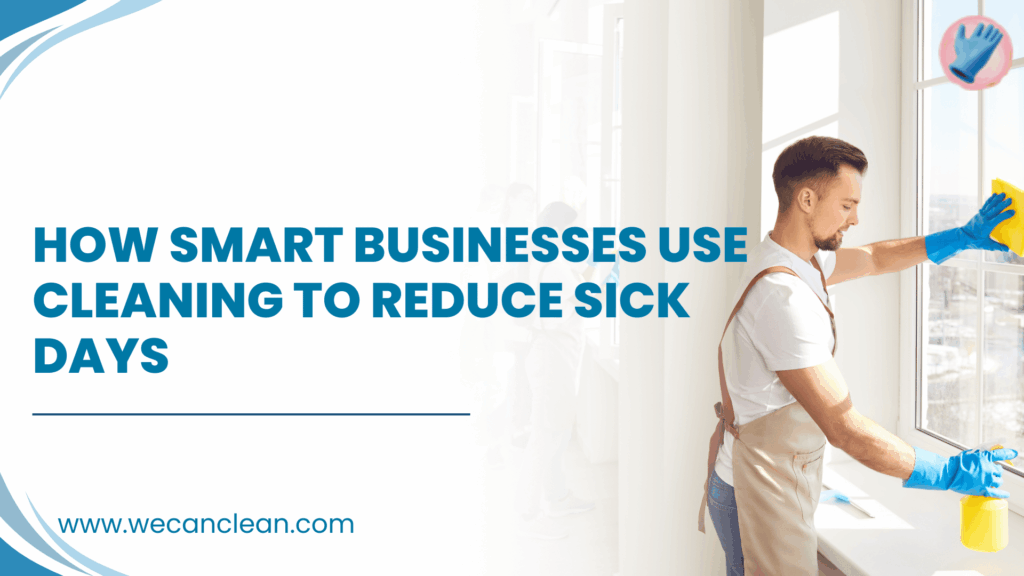
How Smart Businesses Use Cleaning to Reduce Sick Days
Using Strategic Cleaning to Cut Employee Sick Days
And why it works better than most people expect
It usually starts on a Monday morning.
One email comes in. Then another. Then someone texts instead of calling.
“I’m not feeling well today.”
By mid morning, half the team is missing, deadlines slip, phones ring longer, and everyone else quietly absorbs the extra workload.
Most businesses accept this as normal.
It is not.
Sick days rarely start with sickness.
The real cost of sick days for businesses
When someone is off sick, the loss is not just their hours.
It shows up as lower productivity, stressed teammates, delayed projects, and missed client opportunities.
- Lower productivity across the day
- More pressure on remaining staff
- Delayed work and missed deadlines
- Client response times that slip
According to workplace health and safety research in Australia, illness related absenteeism costs businesses billions each year through lost productivity and replacement costs.
And yet, most businesses focus on symptoms rather than causes.
The cost you do not track is the cost that grows.
The overlooked role of workplace cleaning in health
Most offices look clean enough.
Bins are emptied. Floors are vacuumed. Bathrooms smell fine.
But germs do not care how things look.
The real germ hotspots
In workplaces, bacteria spreads fastest through high touch areas.
- Door handles and lift buttons
- Keyboards, mice, and shared desks
- Shared phones and headsets
- Kitchen benches, fridge handles, and microwaves
- Bathrooms, taps, and break rooms
These surfaces are touched hundreds of times a day. If they are not cleaned and disinfected properly, germs simply move from person to person.
Why surface cleaning is not enough
A quick wipe removes visible dirt. It does not remove bacteria effectively.
Commercial cleaning services in Sydney focus on hygienic cleaning, not just visual presentation.
Clean looking is not the same as healthy.
How smart businesses use cleaning as prevention
Smart businesses treat cleaning as prevention, not decoration.
They understand that a clean workplace is not about impressing visitors. It is about protecting their team.
Cleaning as a workplace health strategy
Instead of reacting to sickness outbreaks, smart businesses reduce the conditions that allow germs to spread.
- Regular professional cleaning on a consistent schedule
- Extra attention on high touch points
- Clear standards and repeatable processes
- Accountability and quality checks
Prevention beats reaction every time.
Case study: Same office, fewer sick days
The problem
A small Sydney office noticed a pattern.
Every winter, sick days spiked. Projects slowed down. Team morale dipped.
The office was cleaned, but only lightly and inconsistently.
The solution
They switched to a professional cleaning service using a structured system.
High touch points were prioritised. Bathrooms and kitchens were deep cleaned regularly. Cleaning became consistent rather than reactive.
“We did not change our team or our workload. We changed the cleaning and the sick days dropped.”
Within months, sick days noticeably reduced.
Nothing changed except the cleaning.
What professional cleaners do that offices cannot
Tools, products, and training matter
Many businesses assume internal cleaning is enough. It rarely is.
Professional cleaners use commercial grade disinfectants, correct dwell times for sanitising, microfibre systems that trap bacteria, and checklists to ensure nothing is missed.
This is not about effort. It is about method.
The role of deep cleaning in Sydney workplaces
Even with regular cleaning, workplaces need periodic deep cleaning.
Deep cleaning Sydney offices resets the environment by removing built up grime, bacteria, and allergens from areas that daily cleaning cannot fully address.
If you want practical routines to make results last longer between visits, read proven cleaning methods for long lasting results.
To see the hidden costs when cleaning slips, explore the cost of poor cleaning.
This is where DIY cleaning falls short.
Who benefits most from smarter cleaning
This approach is not just for corporate offices.
- Offices and coworking spaces
- Retail and customer facing businesses
- Property managers and landlords
- Airbnb hosts managing frequent turnover
Anywhere people share space, germs spread quickly without proper cleaning systems.
Healthier spaces work harder.
How to use cleaning to reduce sick days
You do not need to overcomplicate this.
Practical steps businesses can take
- Schedule consistent professional cleaning
- Focus on high touch surfaces in every visit
- Include kitchens and bathrooms in every clean
- Add periodic deep cleaning during high risk seasons
- Do not skip cleans during busy periods
Signs it is time to hire cleaning services
- Frequent staff illness
- Complaints about bathrooms or kitchens
- Cleaning feels rushed or inconsistent
- Surfaces look clean but still feel grimy
Clean smarter, not harder.
Why businesses choose We Can Clean
At We Can Clean, we understand that cleaning is about outcomes, not appearances.
Our services are built around reliable schedules, trained professional cleaners, consistent systems, and attention to health critical areas.
Businesses choose us because they want fewer disruptions, healthier teams, and peace of mind.
Consistency is the real benefit.
Final takeaway: Cleaning is a business decision
Sick days cost more than most businesses realise.
The good news is that many of them are preventable.
Smart businesses use cleaning as a strategy, not an afterthought.
They invest in systems that protect their people and keep operations running smoothly.
Healthy teams start with clean systems.
Leave a Comment
Share:


Related Blog: